Hic sunt dracones
here-be-dragons
Turn any git repo into a fantasy map. The dragons are real.
npx here-be-dragons
Turn any git repo into a fantasy map. The dragons are real.
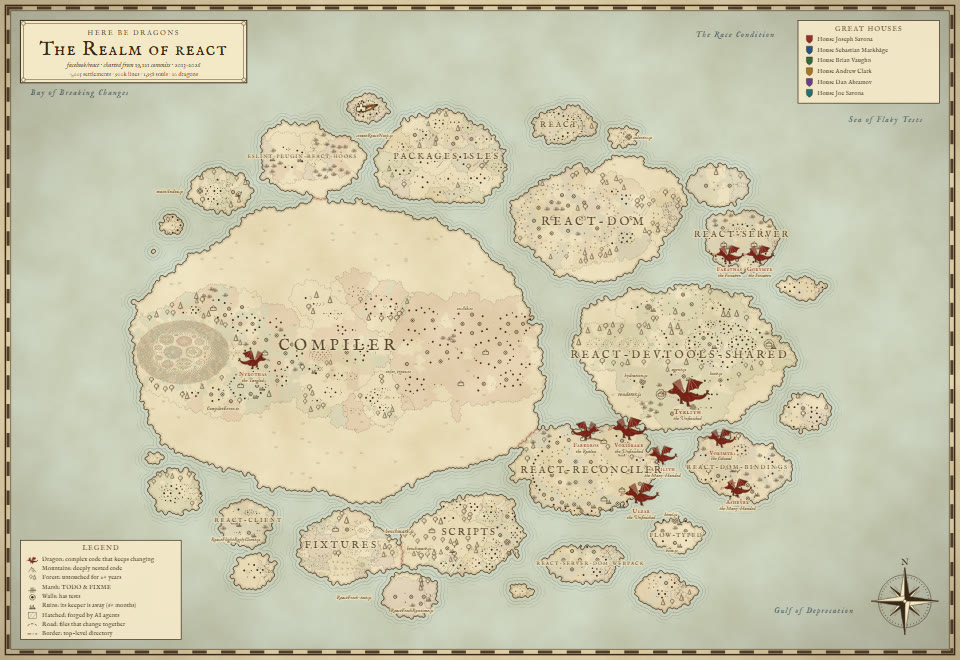
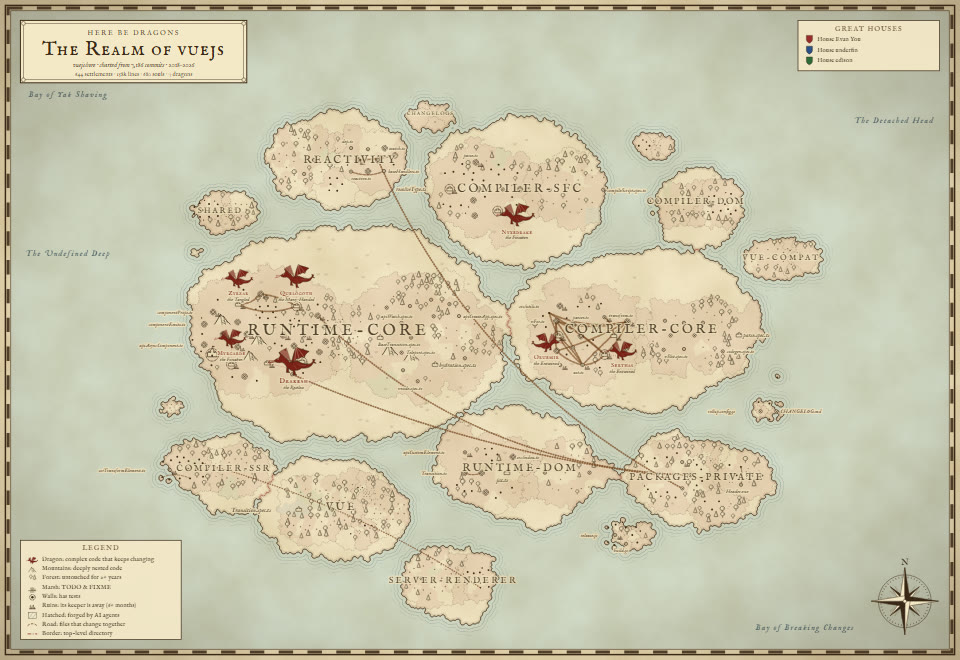
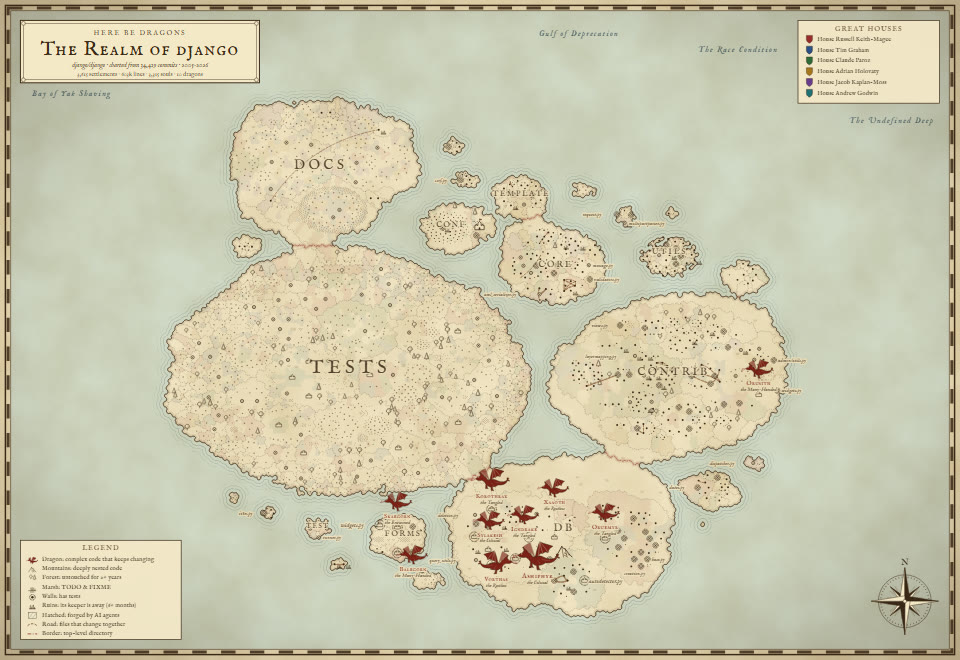
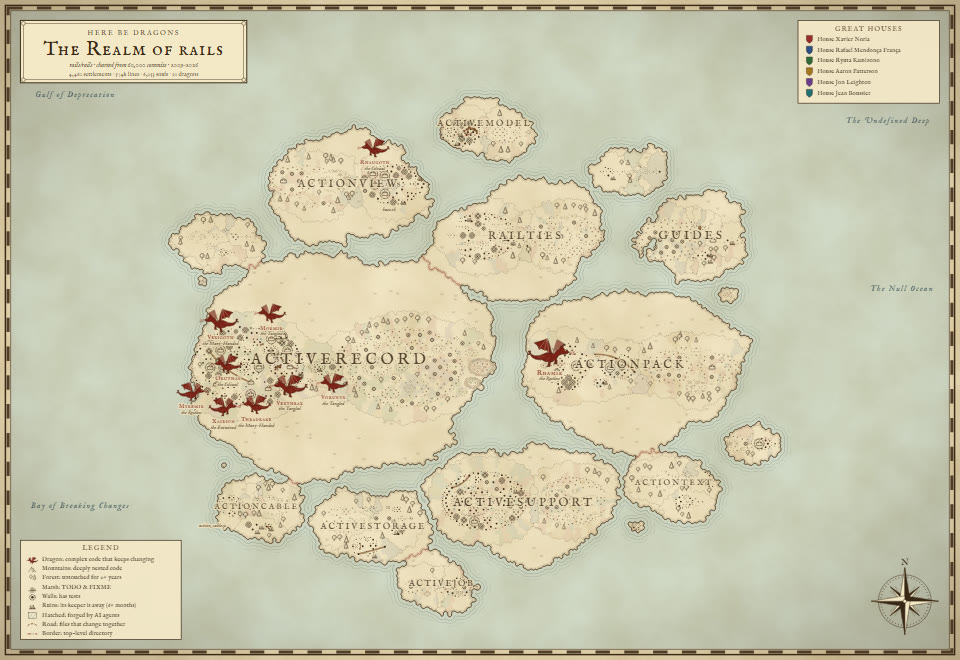
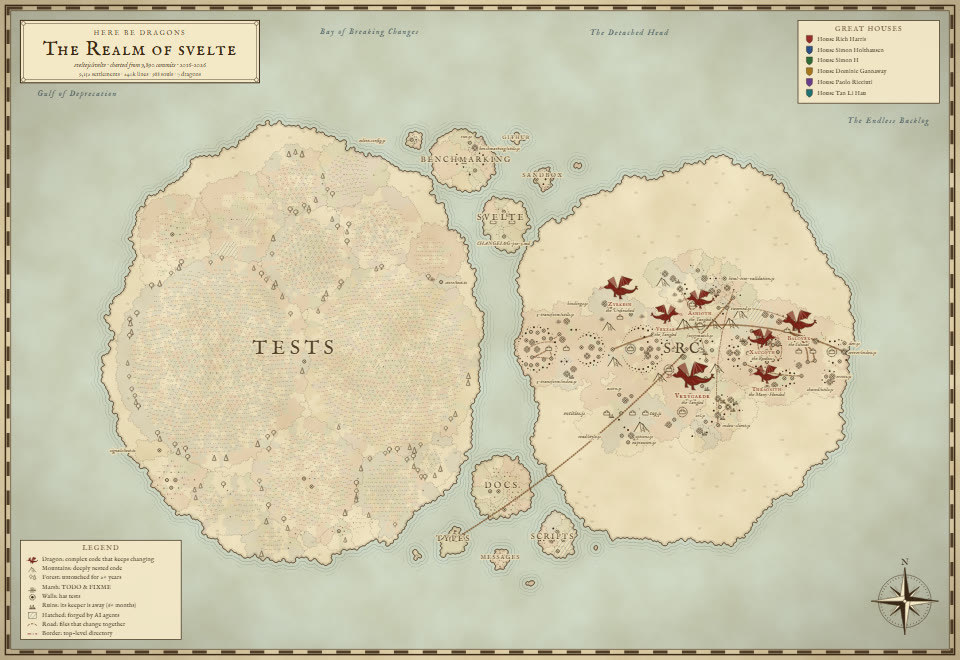
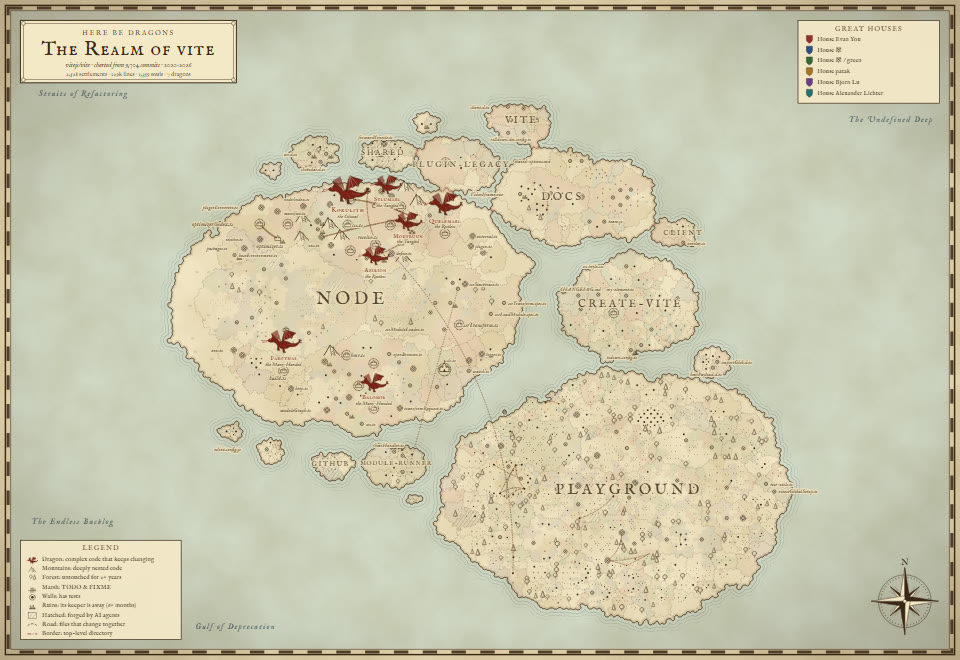
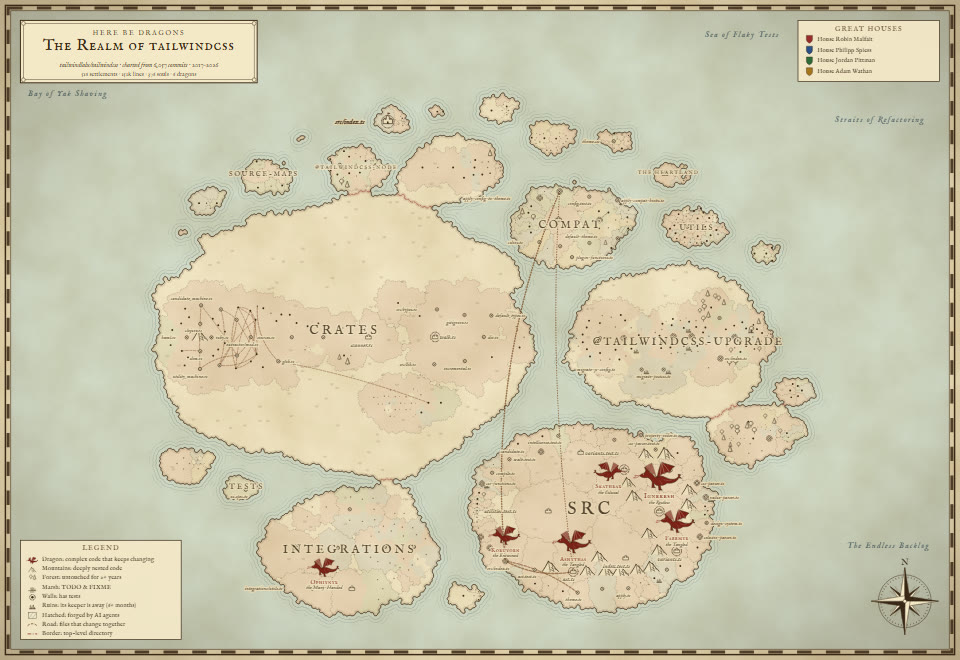
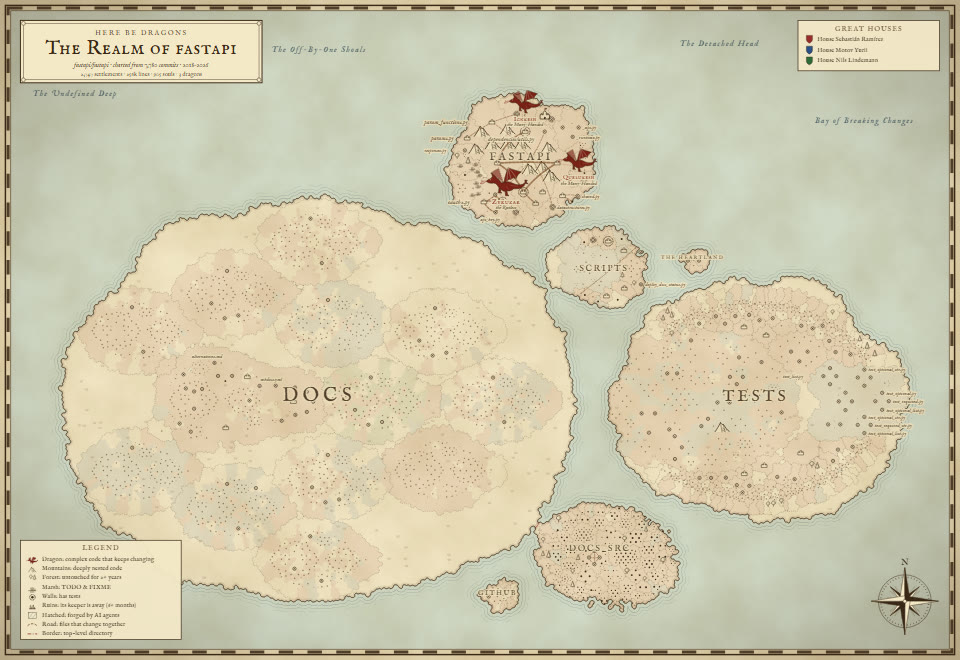
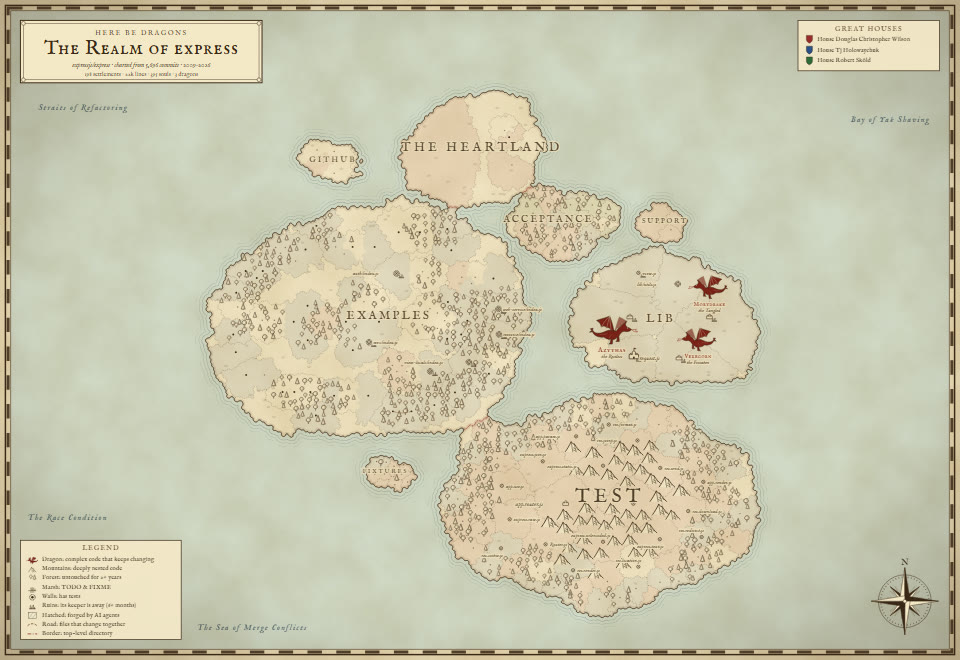
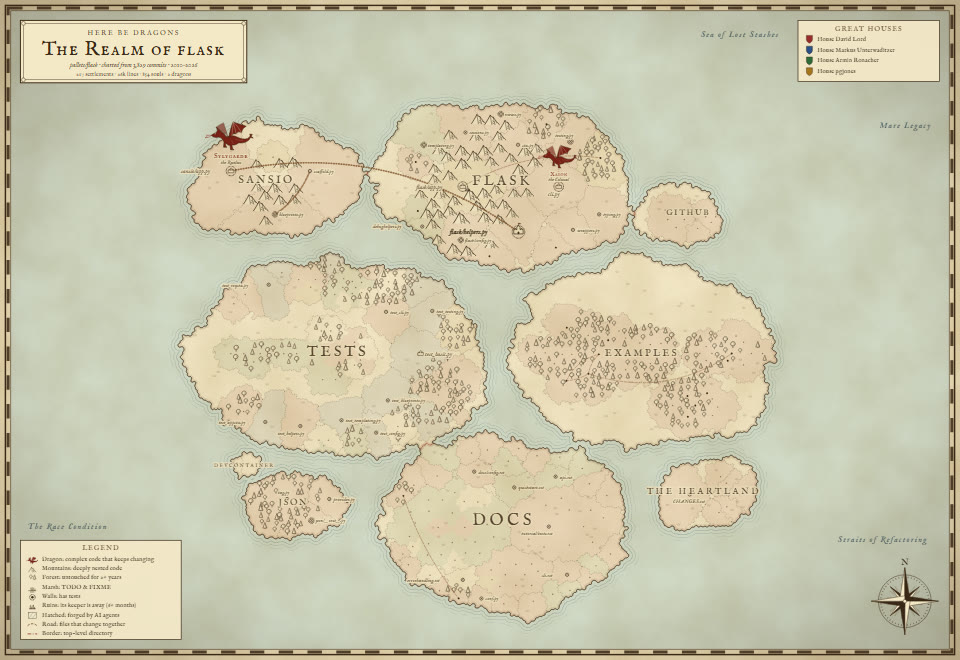
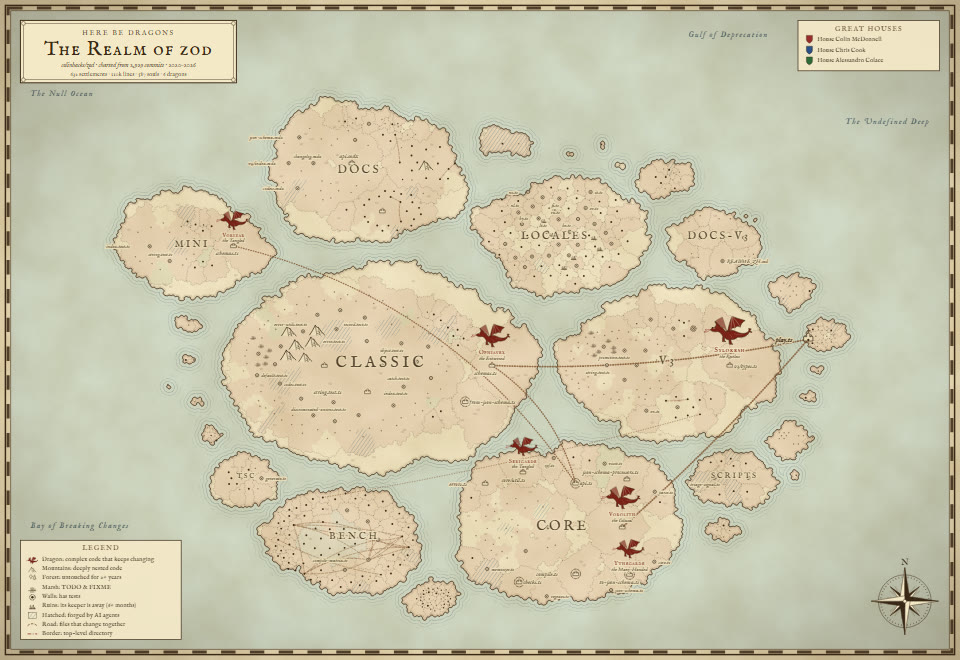
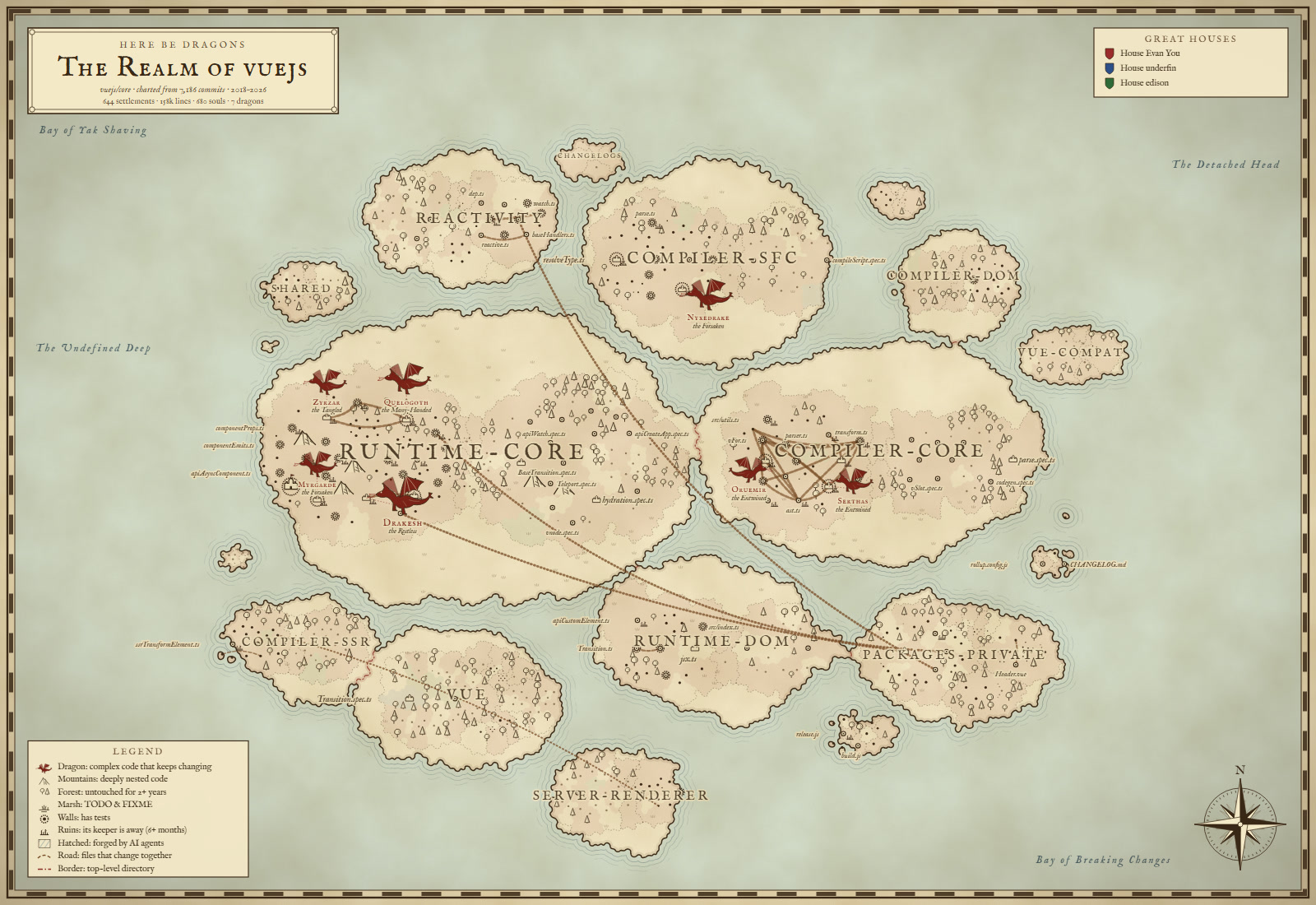
Old cartographers drew dragons where the known world ended. Your codebase has dragons too: the files that are complex and keep changing, where bugs breed. here-be-dragons reads your git history and draws them, along with the roads between files that secretly change together, the ruins left when authors move on, and the land forged by AI agents.
Every map below is interactive. Zoom in, hover a settlement, meet the dragons.
Every mark is computed from your repository. Nothing is decoration.
Hotspots: complex code that changes often. Defects concentrate here.
Deeply nested code.
Code untouched for two years or more.
The biggest and busiest files.
The file has a matching test file.
Files that keep changing in the same commits: hidden dependencies.
Code whose main author has not committed in six months.
Lines written in commits signed by AI coding agents.
Who wrote most of each part of the realm.
Your coding agent should know where the dragons are before it touches your code.
# draw your realm
npx here-be-dragons

# any public GitHub repository
npx here-be-dragons facebook/react

# keep a map in your README
npx here-be-dragons --svg .github/realm.svg
# teach your agent (Claude Code, Codex, Cursor…)
npx skills add rodrigoguedes09/here-be-dragons

# or hand it the survey directly
npx here-be-dragons --json